
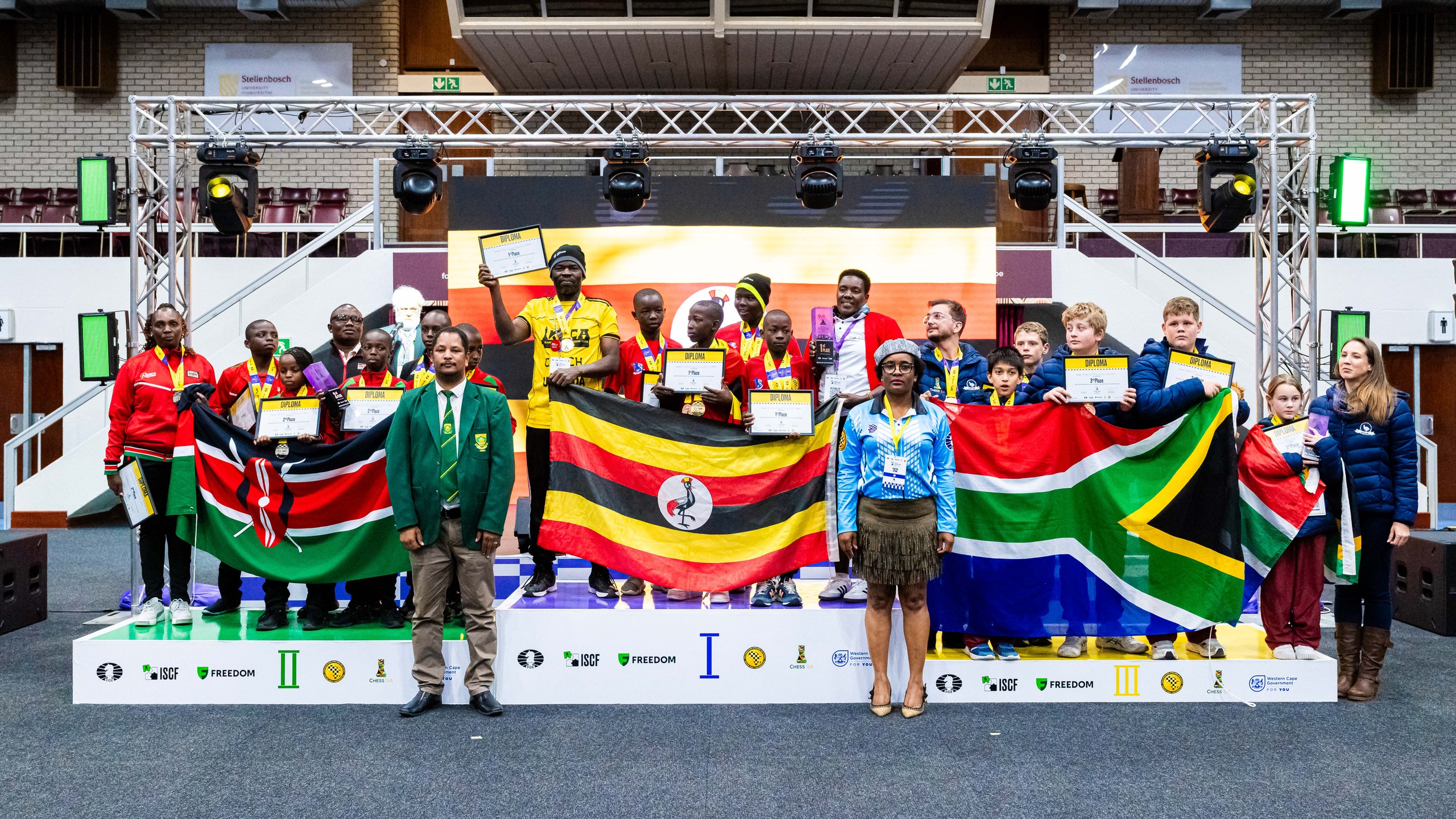
The victory of Uganda’s Sr. Miriam Duggan Primary School in the African stage of the World Schools Team Championship showed what talented children from disadvantaged communities can accomplish when they receive support, structured training, and the chance to compete internationally.
Sr. Miriam Duggan Primary School completed the tournament without losing a single match and was crowned African champion. Kenya’s Moi Nyeri Complex Primary School won silver, while South Africa’s Welgemoed Primary School claimed bronze. All three teams qualified for the Grand Final.
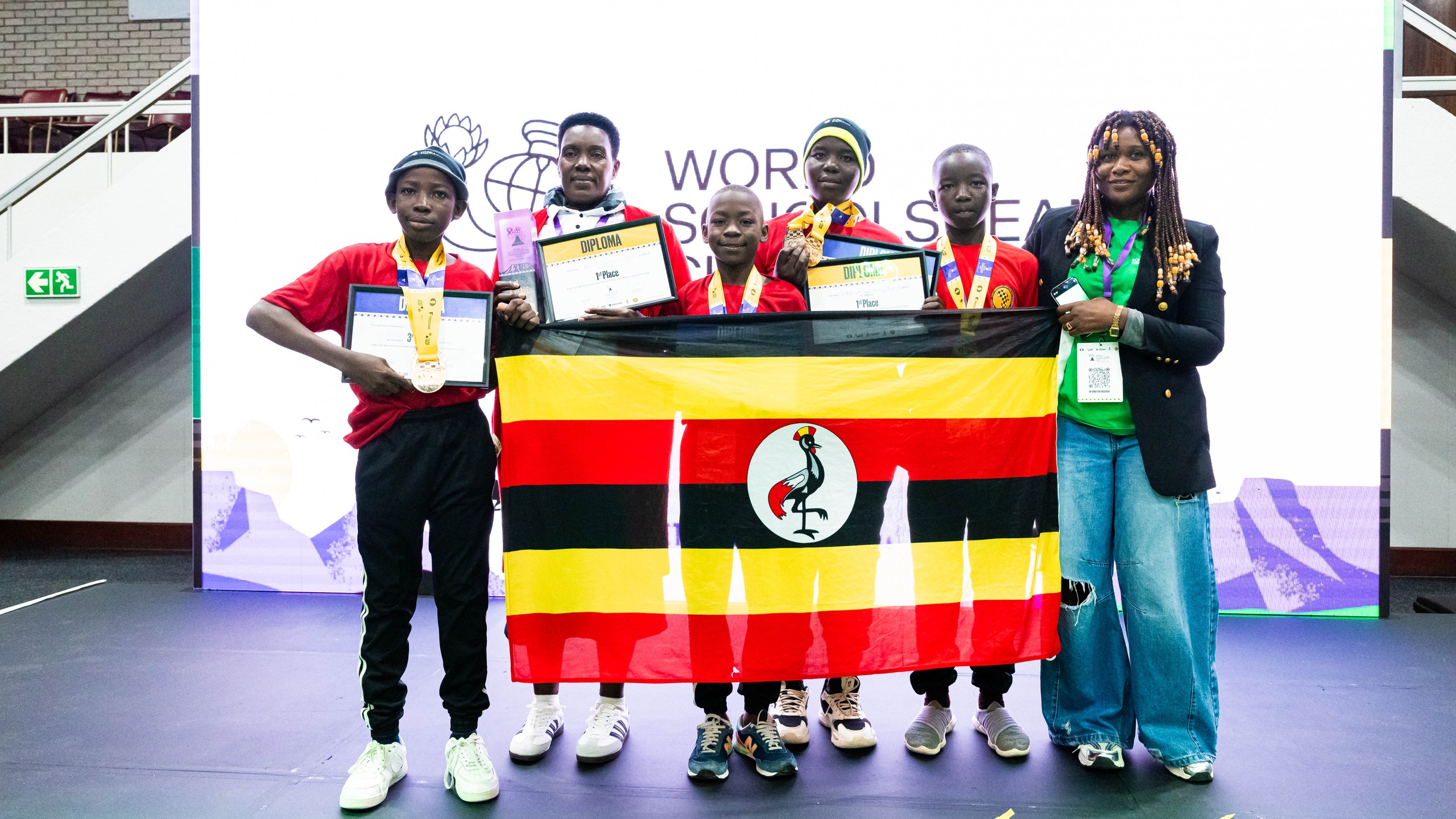
Mukasa said he was humbled by the team’s performance. He explained that the children trained at an academy in a disadvantaged community and that chess was giving them opportunities to travel and represent their country internationally.
Mukasa is the founder of the Kamwokya Teens Chess Club and Academy, where the players from Sr. Miriam Duggan Primary School trained.
“Chess is changing their lives,” he said. “These are kids from an academy in the ghetto, disadvantaged kids, vulnerable to all the problems that come with that. I trained them so that they can get the opportunities that come with chess. Chess is improving them, they are moving around the world, and I’m so proud that wonderful brains from such areas can serve our country and the entire world,” he commented.
A Championship of Opportunities
The African stage brought together 26 school teams from 22 countries in Stellenbosch. Each team consisted of four starting players and one reserve, with both boys and girls included in the lineups.
Another statistic was particularly striking: 91 participants were internationally unrated. For many of the children, the tournament was their first appearance on the international stage.
The championship was designed as more than a contest for medals. Alongside eight rounds of chess, participants attended masterclasses, educational sessions, chess quizzes, and cultural activities. They met children from other countries, represented their schools, and, for the first time, felt part of a broader international chess community.
According to Timur Turlov, president of the International School Chess Federation, the team format helps children understand that meaningful achievements rarely come from individual effort alone.
“It is natural for people to come together, and only as a community can we create truly great things,” Turlov said. “Behind every major institution or enterprise is a team of people. With a strong team, you can accomplish great things and create something genuinely special.”
He stressed that nurturing one talented child is important, but creating an environment in which a whole group of talented students can thrive is even more valuable.
“When not just one person but an entire team or school excels, it creates many more opportunities for growth,” Turlov said. “You can rely on your teammates and build something unique together.”
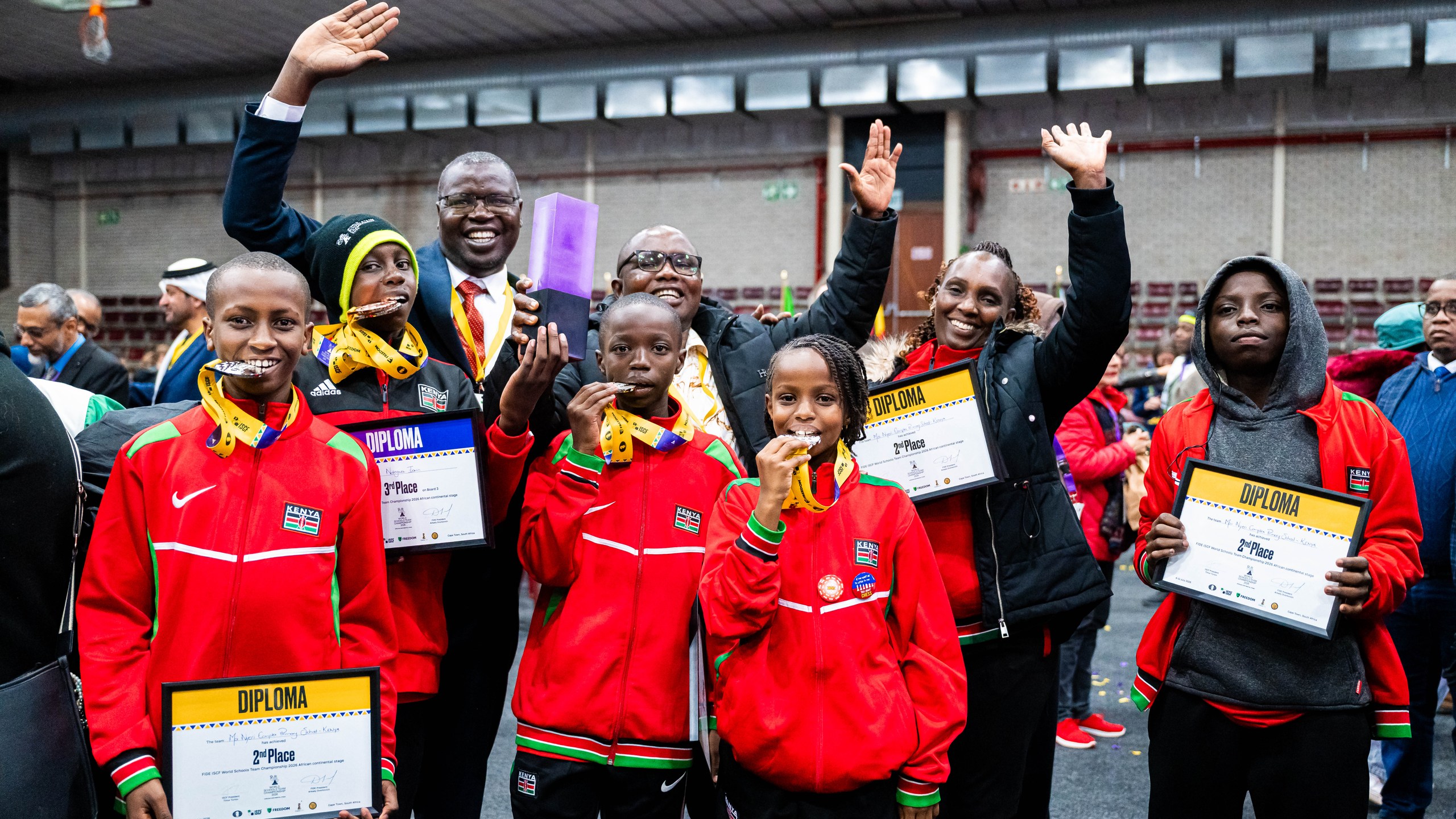
The participants’ stories illustrated his point. Three children from the same family- Davidson, Trevor, and Patricia Waweru-played for the silver-medal-winning Kenyan team. They learned and improved together before ultimately reaching the continental podium.
The bronze medalists from Welgemoed Primary School also endured a tense finish. Their final match against Namibia ended in a 2–2 draw. That result left them one point ahead of Holy Cross Primary and secured the final qualifying place for the Grand Final.

Chess as an Investment in Human Potential
Turlov sees the development of school chess as part of a broader goal: preparing children for life in a world shaped by rapid technological change.
“The success of any country depends on the success of its children,” he said. “When our children succeed, the country succeeds as well. That is why developing human potential is so important. A strong education system, a culture of learning, and the habit of working hard are what ultimately lead a society toward prosperity.”
According to Turlov, this task is becoming increasingly important in the age of artificial intelligence and rapid technological progress.
Today’s children are growing up in a world where the information landscape changes constantly and social media encourages people to shift their attention from one subject to another. Chess can help develop concentration, analytical thinking, and an understanding of the consequences of each decision.
“Today, many people find it difficult to sustain their attention for more than a few seconds,” Turlov said. “We scroll through social media and switch to a new topic every five or ten seconds. Chess is extremely engaging for children, but it also teaches them to stay focused, think strategically, and anticipate the consequences of each move.”
He also noted that technology is gradually narrowing the gap between children from different social and geographical backgrounds.
“Technology is making information, knowledge, and opportunities more accessible. A person can now not only change their own life but also make a significant contribution to their country, even without access to traditional institutions or advanced infrastructure,” Turlov stated,
The journey of the Ugandan champions illustrates his point. Children from a vulnerable urban community were given the opportunity to learn chess, represent their school and country, travel, and compete against some of the strongest school teams on the continent.
Freedom Holding’s Role
Transforming an educational initiative into an international program requires more than just the enthusiasm of coaches and federations. It also requires resources, organizational infrastructure, and long-term partnerships.
Freedom Holding was the main sponsor of the African continental stage and is the general partner of the International School Chess Federation. Its support helped make possible both the tournament and its educational, cultural, and social program.
Led by its founder and CEO, Timur Turlov, Freedom links its support of chess to the broader development of education and human potential. As part of this approach, the company acts as a long-term partner, working with schools, coaches, national federations, and international organizations.
Freedom Holding Corp. is a Nasdaq-listed international financial and technology group operating in 22 countries, including Kazakhstan, the United States, European Union member states. The company has built an integrated digital ecosystem that combines banking, brokerage, insurance, telecommunications, and lifestyle services through the Freedom SuperApp. As of the end of fiscal year 2026, the ecosystem served more than 14 million customers, while the SuperApp had over 5.6 million users. Freedom Holding is expanding this model beyond Kazakhstan, pursuing banking growth in Türkiye and Europe alongside continued investment in digital infrastructure and artificial intelligence.
For the fiscal year ended March 31, 2026, Freedom Holding reported record revenue of $2.19 billion, up more than 26-fold since its Nasdaq listing in 2019. Net income increased 101% year over year to $153.3 million, while total assets rose 33% to $13.16 billion.
A Medal as the Beginning of a Journey
A gold medal cannot solve every problem faced by children growing up in disadvantaged communities. It can, however, change their understanding of what is possible.
Winning such a medal can give children experience communicating internationally, connect them with new mentors and educational opportunities, build their self-confidence, and show others from similar backgrounds that outstanding results are achievable.
For Sr. Miriam Duggan Primary School, the victory in Stellenbosch marked both the end of one journey and the beginning of another. The team arrived as the top seed and lived up to that status by completing the tournament without losing a match.
The Grand Final now lies ahead. There, the young players will face the strongest school teams from other parts of the world.
Yet they have already achieved something even more important. The players from Kamwokya have shown that intellectual talent does not depend on birthplace, family income, or the quality of the surrounding infrastructure. It can emerge anywhere. The real question is whether children will encounter the coaches, schools, communities, and partners that can give them the opportunity to make the first move. In Stellenbosch, those elements came together. The result was African gold.
